


In some states, a worker hurt on a dock, pier or terminal can file two claims for the same injury: one under the federal Longshore and Harbor Workers' Compensation Act (LHWCA) and one under the state's workers' comp law. Lawyers call this concurrent jurisdiction. Other states have passed laws that shut workers covered by the Longshore Act out of state workers' comp, so those workers have only the federal claim.
California allows both. Texas does not. Below is where each state stands, based on state statutes and court decisions as of November 2026.
In Sun Ship, Inc. v. Pennsylvania (1980), the U.S. Supreme Court held that the Longshore Act "supplements, rather than supplants, state compensation law" for injuries on land. So a state may cover the same injury. But each state decides whether it wants to, and many have chosen not to.
No. Under 33 U.S.C. § 903(e), anything you are paid under a state workers' comp law for the same injury is credited against your Longshore benefits. In practice, filing both can mean you receive the higher of the two benefit levels and can use whichever system's rules help you most, not double pay.
Courts in these states have said a state claim and a Longshore claim can go forward together, at least for injuries on land:
Industry lists also treat these states as allowing both, but we have not confirmed each one with a statute or court decision: Alabama, Alaska, Connecticut, Delaware, Massachusetts, Michigan, North Carolina, Rhode Island, South Carolina and Wisconsin.
These states have laws that exclude workers covered by the Longshore Act (or by federal law generally) from state workers' comp. In these states, a covered worker usually has only the Longshore claim:
Free consultation. Se habla español. Call (510) 856-4421.
Reviewed by Daniel Weltin, attorney at law. Updated November 2026. This guide is general information, not legal advice for your case. Laws change, so call us about your situation.

In California, injured workers can get workers' comp no matter their immigration status. Here are your rights and what to do after a work injury.

Claims against public transit agencies have a short deadline: usually six months. Here is what Bay Area bus and train crash victims need to know.
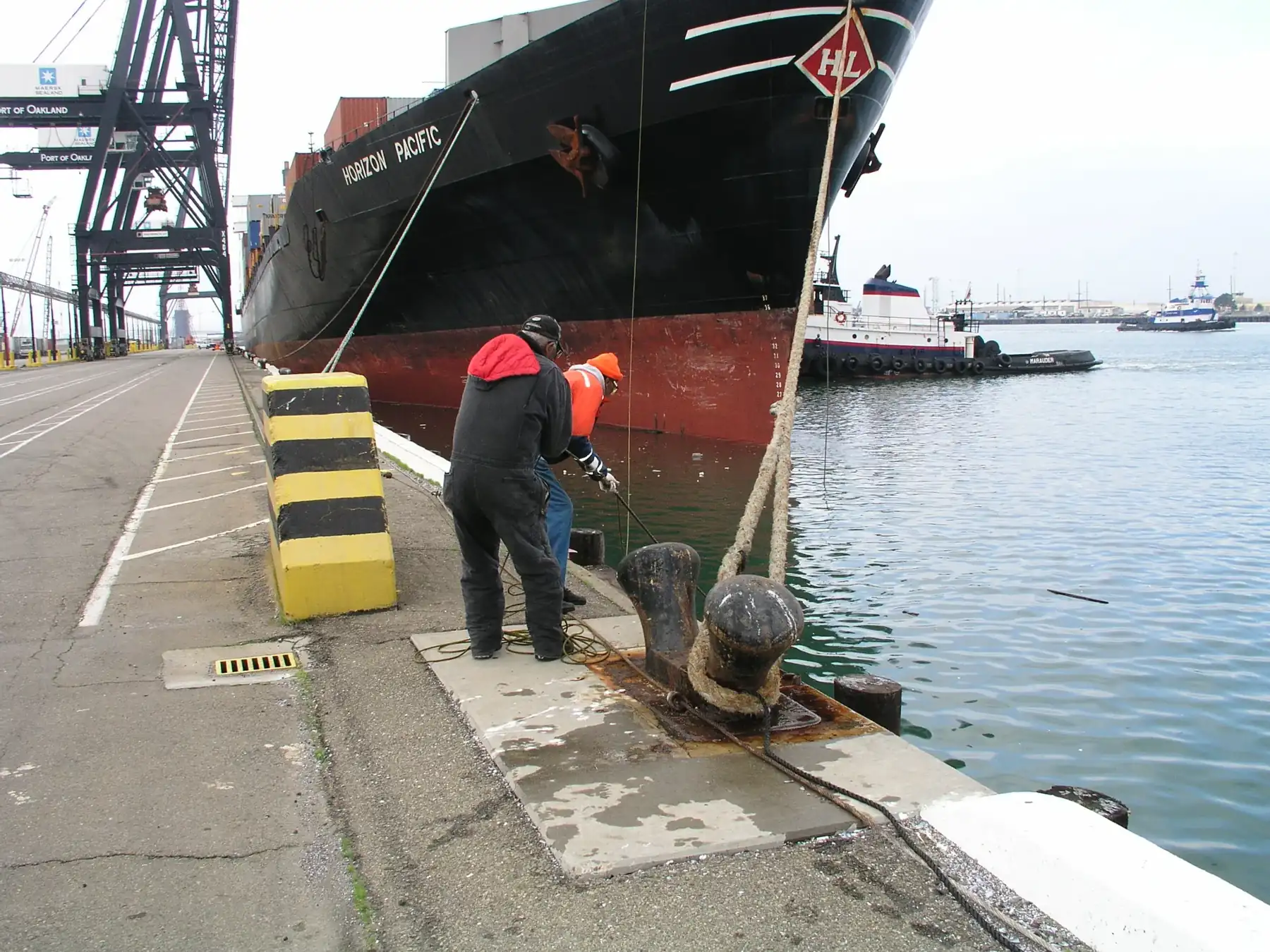
Hurt on a California dock, pier or terminal? You can often file with both the U.S. Department of Labor and the California WCAB. Here is how it works.


